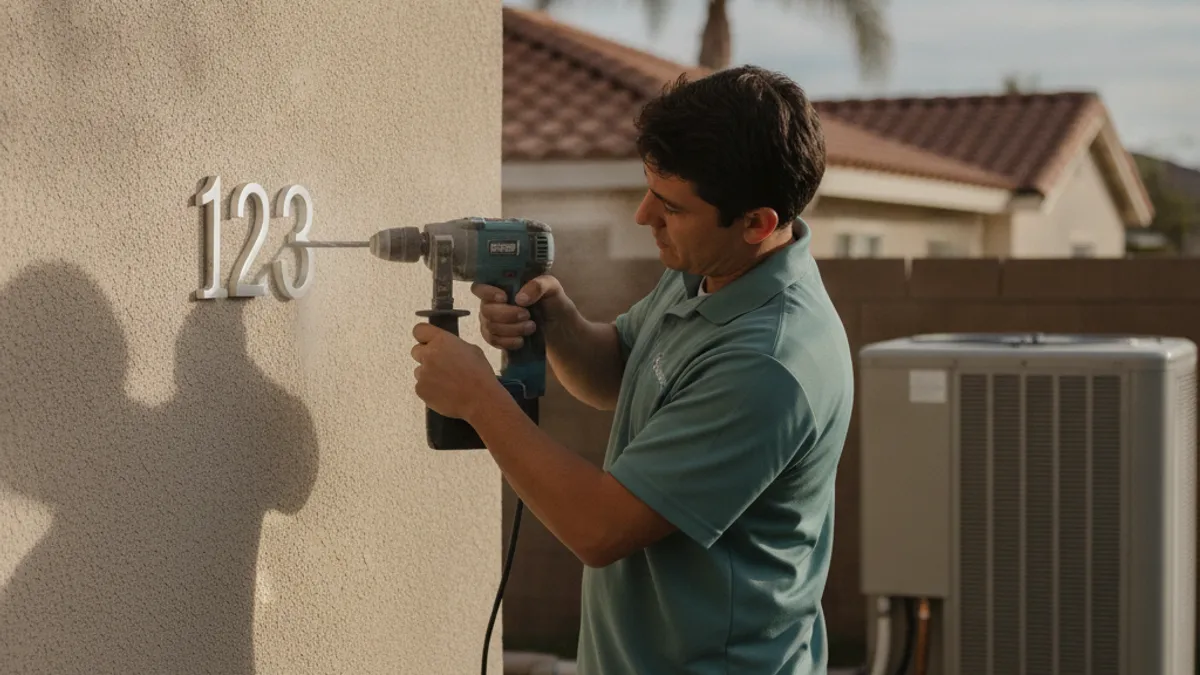
Why a regular drill bit is the first mistake
Stucco is a cement-based material, closer in hardness to concrete than to wood or drywall, and a standard twist bit meant for wood or metal will chatter, grab, and often crack the surrounding finish coat before it makes real progress. The same is true of drilling too fast, applying too much pressure, or trying to power through in one continuous push. Nearly every stucco crack from a DIY drilling job traces back to one of those three habits rather than the wall itself being especially fragile.
Which stucco drill bits actually work
A masonry bit, specifically a carbide-tipped bit designed for concrete, brick, or stucco, is the starting point. These bits have a flared, hardened tip that chips through the cement-based finish coat rather than trying to bore through it the way a wood bit would. For most house-number, shelf-bracket, or fixture-mounting jobs, a hammer drill set to its rotary hammer function, or even a basic hammer drill setting on a standard cordless drill if it has one, makes the job significantly easier and reduces the risk of cracking compared to straight rotary drilling with a masonry bit alone.
Technique that actually prevents cracking
Start with light pressure and a slow speed to establish a shallow pilot mark, letting the bit’s carbide tip do the work rather than forcing it. Once the hole is started, increase speed gradually rather than jumping straight to full power, and pause periodically to clear dust from the hole rather than pushing through a clogged bit, which generates heat and additional stress on the surrounding material. Drilling in short bursts with light back-pressure, rather than one continuous push, gives the material time to chip away cleanly instead of fracturing under sustained pressure.
If you feel the bit suddenly grab or the surface around the hole start to spiderweb, stop immediately. Continuing to drill through a crack that’s already forming almost always makes it worse and can require a legitimate patch repair rather than just a clean, small hole.
Where to drill, and where to avoid it entirely
Stay away from control joints, the intentional gaps built into a stucco system to accommodate expansion and contraction, and any area within a few inches of an existing crack. Both are already stress points, and additional drilling nearby concentrates load exactly where the material is least able to handle it. Corners, near window and door trim, and areas close to the roofline also see more natural stress from building movement than a flat, open wall section, so when you have a choice of placement, a plain wall run is the safer target.
For heavier items like shelving brackets or anything supporting real weight, use masonry anchors rated for the load, not just a screw driven into the hole. A anchor that spreads the load across a wider area of the hole reduces the chance that vibration or weight shifting over time will crack the stucco around it.
Dust control and cleanup during the job
Drilling into stucco produces a fair amount of fine cement dust, more than most people expect from a small hole. Holding a shop vacuum nozzle or even a household vacuum attachment just below the hole as you drill catches most of it before it falls down the wall face and streaks the finish, especially noticeable on lighter colored stucco where dust residue can leave a visible mark if it’s not wiped down promptly. A damp cloth wipe of the surrounding area once the hole is drilled and cleaned out finishes the job cleanly.
A quick note on EIFS and synthetic stucco systems
If your home has EIFS, a synthetic stucco system built around a foam insulation layer rather than traditional cement stucco over lath, the drilling approach changes. EIFS is softer and more prone to crumbling around a drilled hole than traditional stucco, and it typically needs a different anchor type designed for the foam-and-coating assembly rather than a standard masonry anchor. If you’re not sure whether your home has traditional stucco or an EIFS system, a stucco professional can identify it in a few minutes, and it’s worth confirming before you drill anything into an exterior wall you haven’t worked with before.
Sealing the hole after you’re done
Any hole through the finish coat is a potential path for water to reach the lath and sheathing behind it, especially relevant in San Diego’s coastal neighborhoods where wind-driven rain and marine moisture find their way into small gaps more readily than in a drier inland area. A small bead of paintable exterior caulk around the mounting hardware, or a dab of stucco patch compound if the hardware isn’t flush, closes that gap and keeps water from working its way behind the wall over time.
When to just call a professional
For anything beyond mounting light fixtures, house numbers, or small shelving, larger equipment, a mailbox post, security cameras with substantial hardware, it’s worth having a stucco or handyman professional handle the drilling. The cost of a cracked finish coat and the repair that follows is almost always more than the cost of having it done correctly the first time.
What size drill bit do I need for stucco?
Bit size depends on the anchor or fastener you’re using, typically matching the anchor manufacturer’s specification. The bit type matters more than the exact size: always use a carbide-tipped masonry bit, never a standard wood or metal twist bit.
Can I drill into stucco with a regular cordless drill?
Yes, if it has a hammer or impact setting and you use a masonry bit with the technique described above. A drill without any hammer function will work more slowly and requires even more patience and lighter pressure to avoid cracking.
What do I do if I crack the stucco while drilling?
Stop drilling immediately and assess the crack. A small hairline crack from a single drilling mistake can often be sealed with an elastomeric patch compound. A larger crack or one that’s spreading is worth having a professional look at before it gets worse from weather exposure.
If you’re planning a mounting project and want to avoid the risk entirely, or you’ve already got a crack that needs attention, see our stucco crack repair page or call (858) 400-4352.
Stucco Pro SD connects San Diego homeowners with experienced, insured stucco crews for repair and patching. Call (858) 400-4352 and we will match you with a crew.