Weep screed stucco repair across San Diego County
Weep screed is the metal termination strip at the base of a stucco wall that drains water out of the stucco system and prevents stucco from contacting the foundation. When it corrodes, clogs, or is buried under soil or hardscape, water pools against the base of the wall and the stucco system starts to fail from the bottom up. We connect San Diego homeowners with insured local crews that replace corroded weep screed, clear the drainage path, and repair the stucco at the foundation line.
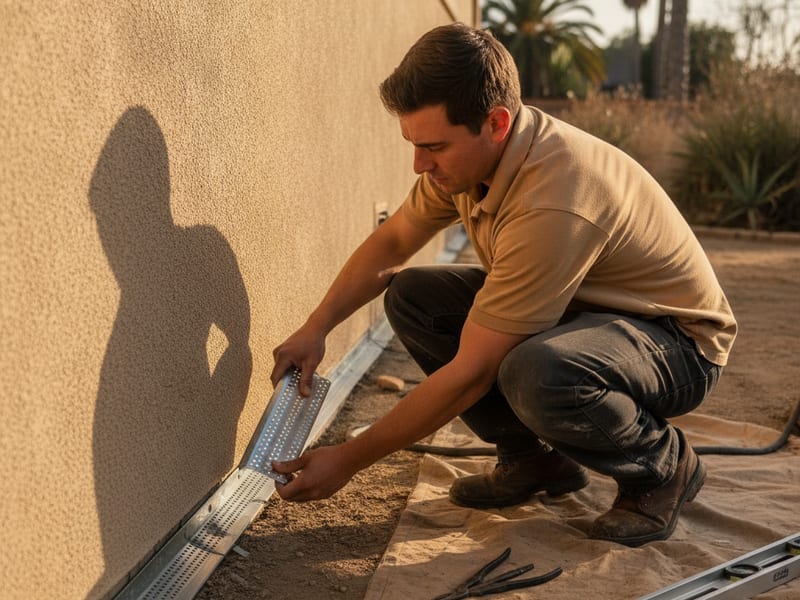
What's included in stucco weep screed repair?
The insured C-35 crews we match you with handle the work itself. On a typical job they:
- Inspect the weep screed and the stucco condition at the base of the wall to determine the extent of corrosion and moisture damage
- Remove stucco from the foundation-line area to expose the existing weep screed and inspect the building paper behind it
- Remove corroded or missing weep screed and install new corrosion-resistant screeds at the correct height above the finished grade
- Replace degraded building paper behind the weep screed area and ensure proper overlap with the paper above
- Apply new scratch coat, brown coat, and finish coat to rebuild the stucco at the foundation line
- Confirm that the drainage path below the weep screed is clear and that soil or hardscape is not bridging the gap to the stucco above
When do you need stucco weep screed repair?
- The bottom edge of the stucco is cracking, staining, or showing rust streaks that trace to the weep screed behind it
- Soil or landscape rock is piled up against the base of the wall and covering the weep screed drainage gap
- Stucco at the base of the wall sounds hollow or has separated from the wall when the stucco higher up the wall is still sound
- A home inspection flagged the weep screed as buried, corroded, or missing at the foundation line
- Recurring cracks at the foundation-wall junction that come back every season
What do homeowners ask about stucco weep screed repair?
What is weep screed and why does it matter?
Weep screed is a metal strip installed at the base of a stucco wall before the stucco is applied. It serves two purposes: it provides a clean termination for the bottom of the stucco system, and it has perforations that allow any water that has traveled down behind the stucco to drain out rather than pool against the foundation. When it is buried, corroded, or clogged, water sits against the base of the wall and drives moisture up into the lath and stucco above.
How common is weep screed corrosion in San Diego?
Very common, particularly in coastal communities and in homes built in the 1950s through 1970s where original galvanized screed has been exposed to salt air for decades. Coastal areas from La Jolla to Oceanside see the most corrosion. Inland areas see weep screed damage primarily from irrigation systems that spray against the base of the wall over many years.
Can I just clear the soil away from the weep screed and leave it?
If the weep screed is still intact and not corroded, clearing the soil and restoring the drainage gap is the right first step. But if the screed is already corroded, or if the stucco above it has been damaged by moisture intrusion, replacement is needed. Clearing the drainage gap stops future water accumulation but does not address damage that has already occurred.
Does weep screed replacement require a permit?
Replacing weep screed and repairing the stucco at the foundation line typically falls within the permit thresholds for stucco patching and does not require a permit in most San Diego jurisdictions. If the scope extends to lath replacement or involves a significant wall opening, permit requirements may apply. The crews we connect you with assess the permit question during the in-home assessment.
Where can you get stucco weep screed repair in San Diego County?
We match you with insured C-35 crews for stucco weep screed repair in every city and community in San Diego County. Pick your city for local climate notes and service specifics.
See stucco weep screed repair in all 67 cities
Need stucco weep screed repair in San Diego County?
We'll match you with an insured local stucco crew for this work.