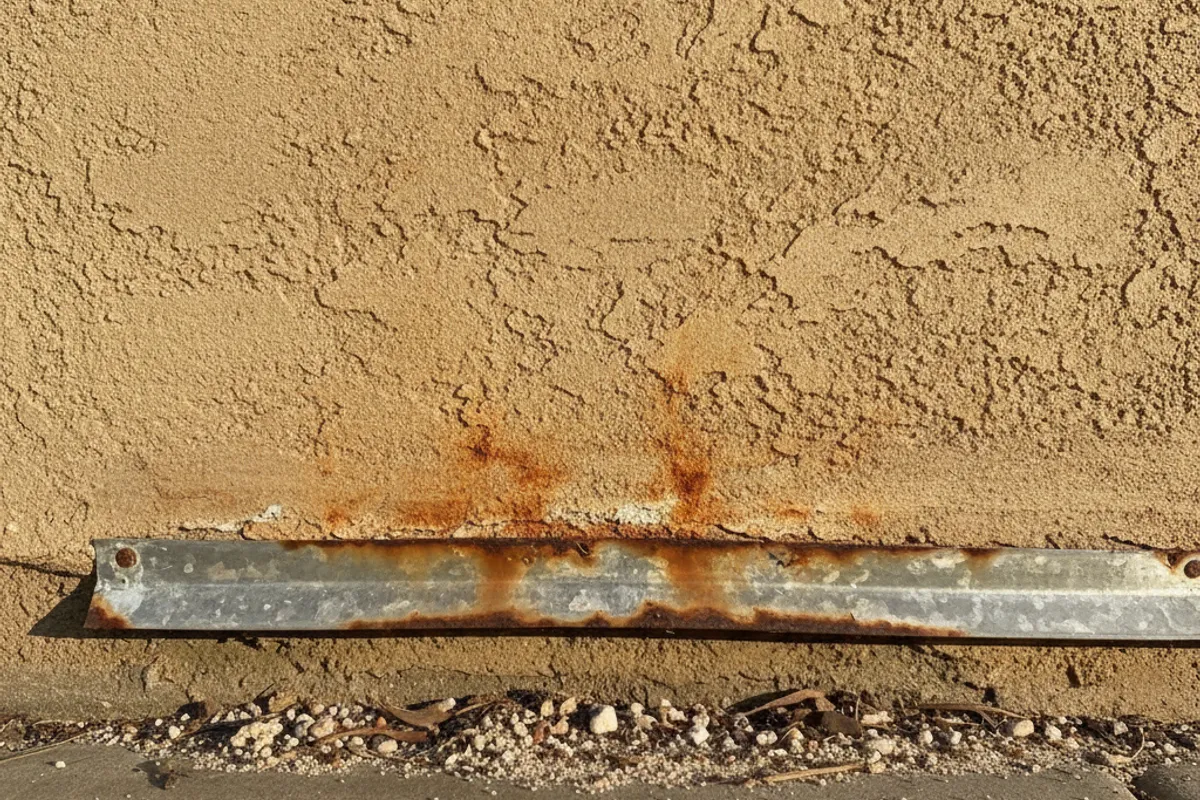
What weep screed actually is
Weep screed is a J-shaped or V-shaped metal channel installed at the base of a stucco wall, right where the stucco system meets the foundation or concrete slab. It serves two purposes: it gives the stucco a clean, straight termination point at the bottom, and it creates a gap that lets any moisture inside the wall assembly drain out rather than accumulate.
The name comes from what it does. When water gets behind the stucco layer, it “weeps” out through the screed channel at the bottom of the wall. Without it, that moisture has nowhere to go except into the substrate, the framing, or back through the stucco face.
California Building Code requires weep screed on wood-framed stucco walls, and for good reason. San Diego’s coastal climate, marine layer cycles, and occasional heavy rain seasons make moisture management a real concern even in a region that most people think of as dry.
Why coastal San Diego homes need functional weep screed
In neighborhoods close to the water, including Oceanside, Carlsbad, Encinitas, Del Mar, La Jolla, and Ocean Beach, marine moisture cycles are a daily reality from May through September. The morning marine layer deposits moisture on and around exterior surfaces. As the day warms up, that moisture cycles through the wall assembly.
On a properly detailed stucco wall, weep screed gives that moisture a path out. On a wall where the weep screed is buried, clogged, or missing, the moisture has nowhere to exit cleanly. Over weeks and months of daily cycling, that leads to lath corrosion, wood rot, and eventually visible damage on the stucco face.
Inland areas like El Cajon, Santee, and Lakeside see less marine moisture but more intense rain events and steeper temperature swings. Weep screed still matters for those homes, particularly when the foundation grade or landscaping directs water toward the base of the wall.
What a buried weep screed looks like and why it happens
The most common weep screed problem in San Diego is burial. Stucco systems need the weep screed to terminate at least 4 inches above finished grade on unpaved surfaces and 2 inches above paved surfaces. When the screed is buried under concrete, pavers, mulch, or built-up soil, water has no exit path and the gap becomes a moisture trap instead of a drainage point.
How does weep screed get buried? In many cases it happened gradually. Soil built up against the foundation over years of landscaping or erosion. Concrete was poured for a patio or driveway after the stucco was applied. Sprinkler systems have been directed too close to the base of the wall for too long. Sometimes the original stucco installation simply left the screed too low relative to the grade.
On older San Diego homes, particularly those built in the 1960s through 1980s, weep screed may be corroded, damaged, or missing entirely. Building practices evolved, and homes from that era were not always installed to current standards.
How to check your own weep screed
Walk the perimeter of your home and look at the base of every stucco wall. You should be able to see a visible gap or flange at the bottom of the stucco, at least a couple of inches above grade. If the stucco runs directly into the soil, concrete, or mulch with no visible termination point, the weep screed may be buried or missing.
Also check for staining or discoloration at the base of walls. Rust staining below the stucco line can indicate a corroded metal weep screed. Efflorescence, the white mineral deposit that forms when water moves through masonry, at the base of walls suggests moisture is moving through that zone in ways it shouldn’t.
Damage to stucco in the lower 12-18 inches of a wall, particularly if it appears on multiple walls or on walls that face the prevailing weather, is worth having looked at by an experienced stucco contractor. The cause is often water that has no drainage path at the base of the wall.
Repair and replacement options
If weep screed is buried under soil or mulch, the first fix is simple: pull back the landscaping material to expose the gap. This costs nothing except time and is worth doing as a preventive measure before problems develop.
If weep screed is buried under concrete or pavers, the fix is more involved. The concrete has to be cut or removed to expose the screed and restore the code-required clearance. This is not a stucco repair in the traditional sense, but it is part of addressing moisture issues at the base of the wall.
If the screed itself is corroded, damaged, or missing, it has to be replaced. This means cutting the stucco at the base of the wall, removing the damaged component, installing new weep screed, and finishing the stucco at the termination point. It is a targeted repair, but it requires someone who understands the full stucco assembly, not just surface patching.
Verify any contractor’s C-35 (Lathing and Plastering) license at cslb.ca.gov before work begins. Weep screed replacement is part of the stucco system and should be handled by a contractor who understands how all the components interact.
Weep screed in the context of a full stucco inspection
If you’re having stucco work done for any reason, ask the contractor to inspect the weep screed as part of the assessment. On older San Diego homes, it’s one of the first things worth checking and one of the most often overlooked.
A contractor doing a re-stucco who doesn’t mention weep screed, grade clearance, or drainage at the base of the wall is missing a key part of the job. The finish coat on top of a compromised drainage system will develop problems again sooner than it should.
For an overview of stucco moisture damage and what it looks like inside the wall, see the stucco waterproofing and moisture barrier guide.
Call (858) 400-4352 to connect with insured local stucco crews serving San Diego County. Verify any contractor at cslb.ca.gov before work begins.