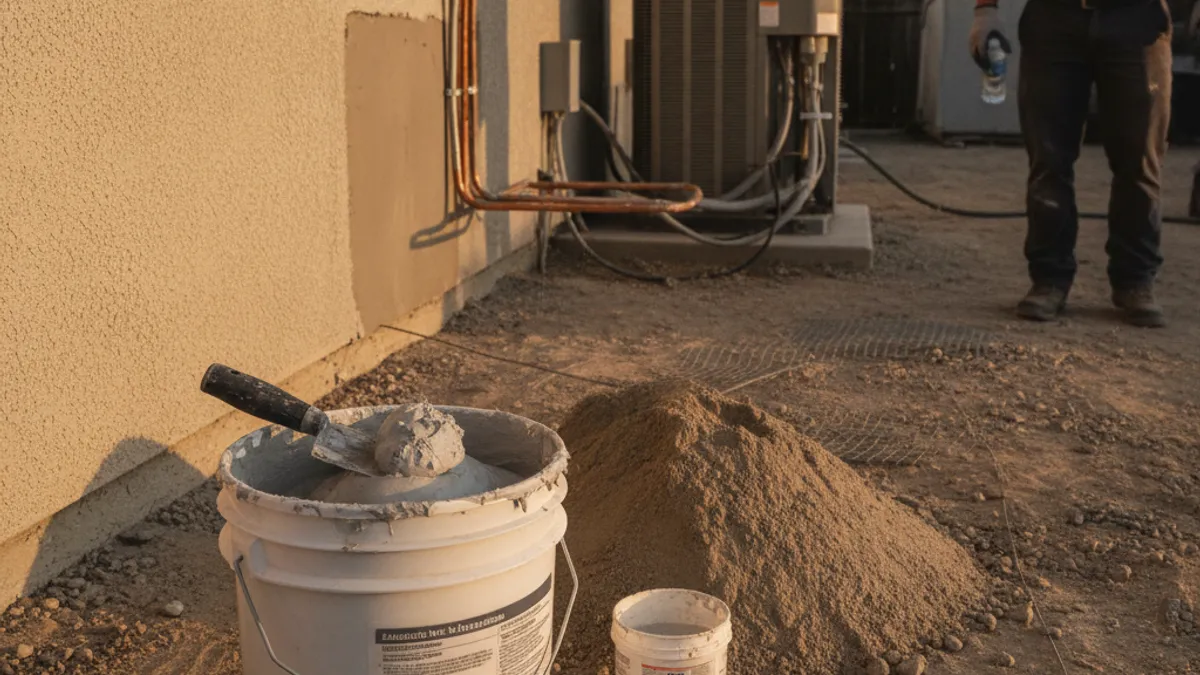
The question that gets skipped in most repair conversations
Homeowners researching a stucco repair usually get as far as understanding the difference between a patch and a full recoat, or between a hairline crack and a structural one. What tends to get skipped is what actually goes into the repair itself, the materials a crew mixes, applies, and blends into the existing wall. Understanding that layer helps you evaluate whether a quote makes sense and why two contractors might recommend different approaches for what looks like the same crack.
Traditional cement-based stucco patch
Traditional stucco is a cement, sand, and lime mixture, and a traditional repair uses a matching cement-based patch compound to fill the damaged area. This is the right material when you’re matching an existing traditional three-coat system and want the repair to behave the same way as the surrounding material, expanding and contracting similarly with temperature changes and taking paint or a color coat the same way. The tradeoff is that cement-based patch is rigid. It bonds well but doesn’t flex, so on a crack caused by ongoing minor movement rather than a one-time event, a straight cement patch can crack again at the same spot.
Bonding agents, the step that gets skipped
Before any patch compound goes on, the repair area needs a bonding agent, a liquid or slurry applied to the existing substrate that helps the new material chemically and mechanically grip the old. Skipping this step, or using a lower-quality product to save time, is one of the most common reasons a patch fails within a year or two. The new material sits on top of the old rather than truly bonding to it, and it eventually separates, sometimes visibly, sometimes as a hollow-sounding patch that hasn’t fully failed yet but will. Ask any contractor bidding a repair whether their process includes a bonding agent step, and expect a clear answer, not a vague one.
Elastomeric patch compound
Elastomeric repair compound is a flexible, rubberized patch material designed to move with the substrate rather than fight against it. This matters most on cracks caused by ongoing minor building movement, thermal cycling, or settling, situations where a rigid cement patch is likely to crack again at the same location. Elastomeric compound is also the standard choice over EIFS, the foam-and-synthetic-coating system, since EIFS’s coating layer is inherently more flexible than traditional cement stucco and a rigid patch doesn’t match its behavior.
The tradeoff with elastomeric patch is texture and paint compatibility. It doesn’t always take a sprayed or troweled texture identically to traditional stucco, and it requires an elastomeric-compatible paint or color coat over it rather than a standard exterior paint, or the flexibility advantage is lost. A contractor who understands this will spec the right topcoat; one who doesn’t may leave you with a technically sound patch that looks or ages differently than the surrounding wall.
When each one is the right call
Use traditional cement patch for one-time damage, an accidental impact, a nail hole, water damage that’s been fully dried and isn’t an ongoing issue, where the underlying cause isn’t active movement. Use elastomeric patch for recurring hairline cracking, especially around window and door corners where stress concentrates, for EIFS repairs specifically, and for any crack where the cause is ongoing structural movement that a rigid patch would just crack through again.
Color and texture matching after the repair
Whichever material goes into the patch, the final step is matching the surrounding wall’s texture and color, and this is where a technically sound repair can still look wrong if it’s rushed. Texture matching involves replicating the surrounding wall’s specific application pattern, a fine sand float, a heavier dash, a hand-troweled texture, using the same tools and technique the original crew likely used. Color matching for an integral color finish means mixing a batch that accounts for how the surrounding stucco has faded or weathered since it was originally applied, not just matching a paint swatch to the current visible color, since sun exposure changes color over years in ways a fresh, unweathered patch won’t automatically account for.
Why San Diego conditions make this choice matter more
Coastal properties see more moisture cycling from salt air and marine layer, which can affect how well a patch bonds and cures if the substrate isn’t fully dry before repair work starts. Inland and East County homes see more thermal cycling from hot days and cool nights, which is exactly the kind of ongoing movement that favors elastomeric compound over a rigid cement patch for recurring cracks. A repair crew that asks about your specific location and crack history before recommending a material, rather than defaulting to whatever they usually use, is doing the diagnostic work that actually determines whether the repair lasts.
Is elastomeric patch better than traditional stucco patch?
Neither is universally better. Elastomeric flexes with movement and suits recurring cracks and EIFS repairs. Traditional cement patch matches traditional stucco’s rigidity and behavior for one-time damage. The right choice depends on what caused the crack in the first place.
Why did my stucco patch crack again after repair?
The most common reasons are skipping or under-applying a bonding agent, using a rigid cement patch on a crack caused by ongoing movement instead of elastomeric compound, or applying the patch over a substrate that wasn’t properly prepped or dried first.
Can I mix elastomeric and traditional patch materials on the same wall?
Generally no, not in the same repair area. The two materials behave differently under movement and often need different topcoats. Mixing them in one patch area risks an uneven repair that ages or cracks differently across the same visible section.
To get the right repair approach diagnosed for your specific crack, see our stucco crack repair page or stucco patching page, or call (858) 400-4352.
Stucco Pro SD connects San Diego homeowners with experienced, insured stucco crews for repair and patching. Call (858) 400-4352 and we will match you with a crew.