The short answer
Yes, you can apply new stucco over existing stucco, but only when the existing stucco is in the right condition. If the existing stucco is delaminating, actively holding moisture, or structurally compromised, applying new material over it creates a system that will fail faster than either the old or new stucco would on its own.
The decision to over-coat versus tear off comes down to one question: is the existing stucco still bonded to the substrate? If the answer is yes, with no delamination or hollow spots, an over-coat is a legitimate option. If any part of the existing stucco has separated from the lath or the brown coat, the over-coat will eventually follow.
When over-coat is the right call
An over-coat works when the existing stucco system is structurally sound but the finish coat has aged past its serviceable life. This is common on San Diego homes from the 1980s and 1990s where the three-coat base is still in good shape but the color coat is faded, chalking, or showing widespread hairline cracking.
The test is physical, not visual. A contractor should tap across the entire wall surface and listen for hollow spots, which indicate delamination. They should probe any cracks to see how deep they go. They should check the weep screed and base detail to confirm there’s no active moisture infiltration. If all of that comes back clean, a new finish coat over the existing system is a legitimate, cost-effective approach.
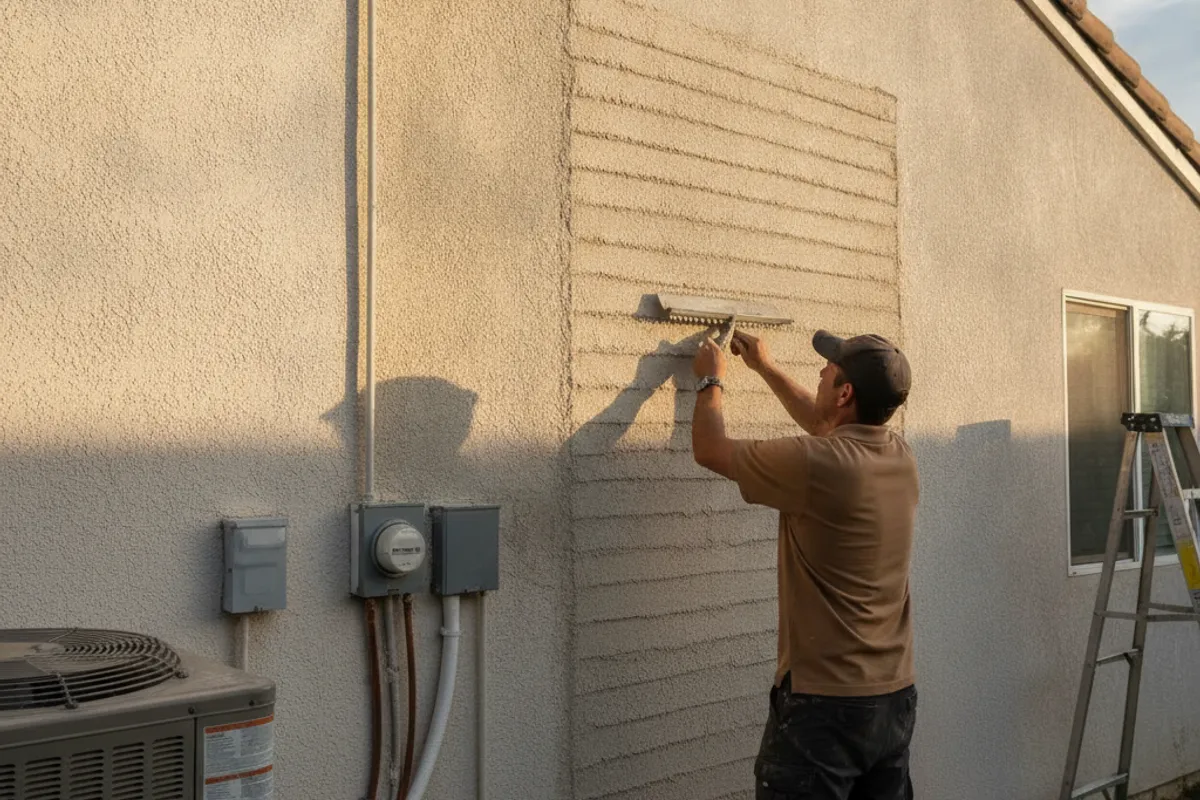
An over-coat in this context typically means applying a new color coat or a texture coat, not a full three-coat re-application. The existing scratch coat and brown coat stay in place. The new coat bonds to the old finish coat and creates a fresh surface.
Homes in drier inland areas like El Cajon, Santee, and Ramona with sound existing stucco are often good candidates for this approach, because the drier climate puts less stress on the stucco system and delamination is less common than in coastal zones.
When over-coating creates problems
Applying stucco over existing stucco that has hidden moisture damage is the most common way a San Diego stucco project goes wrong quickly. The new coat seals in the moisture, the lath continues to corrode, and the new material starts to crack and delaminate in the same areas.
Signs that over-coating is not safe:
Hollow spots on tap test. Even a single large delaminated section means the stucco is no longer continuously bonded. Water gets behind delaminated areas and migrates laterally. Over-coating that section traps the problem.
Staining at the base of walls. Rust staining below the stucco line or efflorescence at the base suggests active moisture movement through the wall assembly. That needs to be resolved before any new material goes on top.
Previous over-coats already on the wall. California code allows stucco to be over-coated, but added coats add weight and change how the wall bonds. If the wall already has more than one previous over-coat, ask the crew and the building department whether a tear-off is the better path. This page cannot set a thickness limit.
Active cracks. Cracks that are still moving because of ongoing substrate settlement, framing movement, or seismic activity will telegraph through a new coat. An over-coat does not stabilize a moving crack. Structural cracks need to be addressed at the cause before any new stucco is applied.
The over-coat process
A legitimate stucco over-coat on a sound existing wall involves more prep than most homeowners expect.
The existing surface has to be cleaned of all dirt, chalk, efflorescence, and any loose or flaking material. Any hairline cracks get filled and feathered. Any small hollow spots that are isolated and small enough to repair get cut out, re-lathed if necessary, and patched to grade. The weep screed base gets inspected and cleared.
Then the new coat is applied in a thickness appropriate to the finish type. A hand-troweled smooth or sand finish over an existing textured wall needs to be thick enough to read as consistent, which requires skill and adequate material. A sprayed texture can go on thinner.
The cure schedule matters even on an over-coat. The new material needs the same drying time as any other stucco coat, and applying it in direct afternoon sun in San Diego’s summer heat without shade or misting can cause premature drying that shows up as map cracking later.
Cost comparison with tear-off
An over-coat on a sound existing stucco wall usually costs less than a full tear-off and three-coat re-stucco, because it skips the demo, the disposal, and two of the three coats. The crew quotes both options in writing after seeing the wall. This page does not set a ratio.
The savings disappear if the over-coat fails early because the underlying system wasn’t actually sound.
For a full breakdown of re-stucco costs, see the cost to re-stucco guide.
Getting it assessed correctly
A qualified stucco contractor should be willing to tell you honestly whether your existing stucco is a good candidate for an over-coat or whether a tear-off is the better approach. Be skeptical of anyone who commits to an over-coat without tapping the wall for delamination or checking the base detail. Also be skeptical of anyone who recommends a full tear-off without actually finding a reason to do one.
The tap test is simple and belongs on the whole wall, not one corner. Any contractor who doesn’t do it before recommending an over-coat is either cutting corners or doesn’t understand the system.
Verify any contractor’s C-35 license at cslb.ca.gov before signing an agreement.
Call (858) 400-4352 to connect with insured local stucco crews serving San Diego County who can assess your existing stucco and give you an honest recommendation on whether an over-coat or a full re-stucco is the right call for your home.