Lath replacement across San Diego County
Corroded metal lath is the structural failure mode that cracks and patches cannot fix. When salt air, chronic moisture intrusion, or age has rusted the galvanized wire mesh that the stucco is keyed into, no amount of surface repair will hold. We connect San Diego homeowners with insured local crews that remove the failing stucco, replace the lath and building paper, and start the new stucco system from a sound substrate.
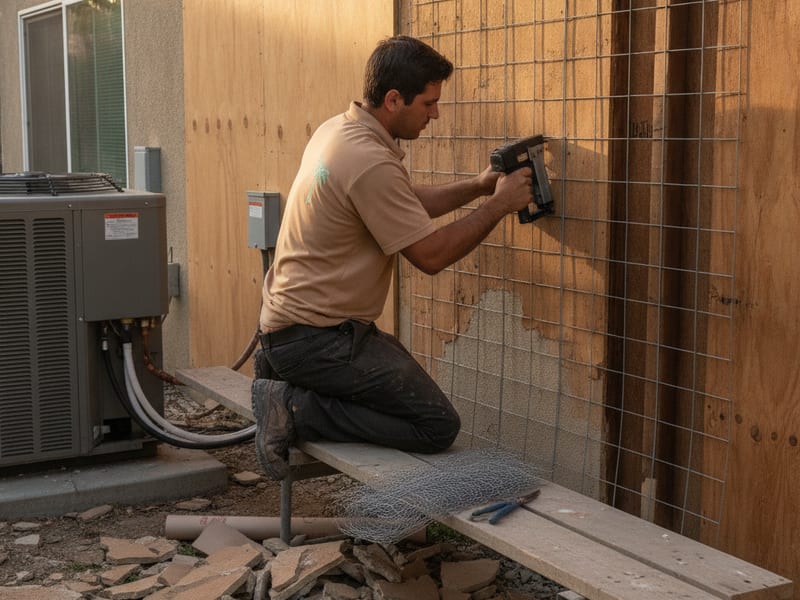
What's included in stucco lath replacement?
The insured C-35 crews we match you with handle the work itself. On a typical job they:
- Probe and tap test the stucco to map the extent of lath failure and delamination before demolition begins
- Remove stucco in the affected area down to the sheathing, taking care not to disturb framing or window and door rough openings
- Inspect the sheathing, sill plates, and any moisture barriers beneath the removed stucco for rot or damage
- Install new galvanized self-furring metal lath at the specified overlap and fastener spacing, with new Grade D building paper or housewrap lapped correctly at seams and penetrations
- Apply the scratch coat over the new lath with proper embedment so the stucco keys into the mesh
- Apply the brown coat and finish coat in sequence with required cure windows between each layer
When do you need stucco lath replacement?
- Large sections of stucco have delaminated from the wall and sound completely hollow when tapped
- Stucco has cracked along lines that follow the lath grid pattern, indicating the lath itself is moving or corroding
- Rust staining appears through the finish coat in a pattern that traces the lath behind it
- A contractor has opened a wall section and confirmed corrosion of the existing lath
- A home built in the 1950s or 1960s near the coast or with a history of moisture intrusion
What do homeowners ask about stucco lath replacement?
How do I know if my lath needs replacing?
The most reliable field test is tapping the stucco with a hard object in a grid pattern. Sound stucco produces a dense thud; delaminated stucco over corroded lath produces a hollow sound. Rust staining through the finish coat, widespread cracking that follows a grid pattern, and large areas of stucco that have fallen away entirely are all signs of lath failure. The crews we connect you with confirm lath condition in the in-home assessment.
Can lath corrosion spread if left alone?
Yes. Water that has gotten behind the stucco continues corroding the lath, and corroding lath loses its grip on the stucco above. The delaminated area grows over time. The sheathing and framing beneath are also at risk once moisture has a pathway through the stucco system. Addressing lath failure early is less costly than waiting until the damage extends to the structure.
Does lath replacement require a permit?
Yes. Lath replacement is a structural alteration of the exterior wall assembly and requires a permit in San Diego and most surrounding cities. The building inspector needs to see the new lath before the scratch coat covers it. The crews we connect you with manage the permit and schedule the lath inspection.
What type of lath is used in San Diego?
Self-furring galvanized expanded metal lath is the standard for new and replacement lath in San Diego. The self-furring dimples hold the lath off the surface slightly, which allows stucco to key behind the mesh for a stronger bond. Galvanized coating resists corrosion in coastal and humid environments. Coastal locations within a mile of the water sometimes specify hot-dipped galvanized lath for additional corrosion resistance.
Is store-bought stucco mesh the same as the lath in the wall?
The rolls labeled stucco mesh or stucco netting at a lumber yard are a building product. On a finished house, that mesh is already buried in the coats. Searching stucco mesh because the wall sounds hollow or shows rust stains is a lath-failure question, not a shopping list. Replacement means opening the wall, putting new galvanized lath over a weather barrier, then rebuilding the coats. Hardware-store mesh does not go on top of failing stucco.
Where can you get stucco lath replacement in San Diego County?
We match you with insured C-35 crews for stucco lath replacement in every city and community in San Diego County. Pick your city for local climate notes and service specifics.
See stucco lath replacement in all 67 cities
Need stucco lath replacement in San Diego County?
We'll match you with an insured local stucco crew for this work.