Stucco crack repair across San Diego County
Cracks in stucco are not all the same. A hairline shrinkage crack in the finish coat is a different problem from a crack that follows a lath seam or one that traces a path where water has been getting behind the wall. We connect San Diego homeowners with insured local crews that diagnose the cause before filling, so the repair addresses the right problem and holds long term.
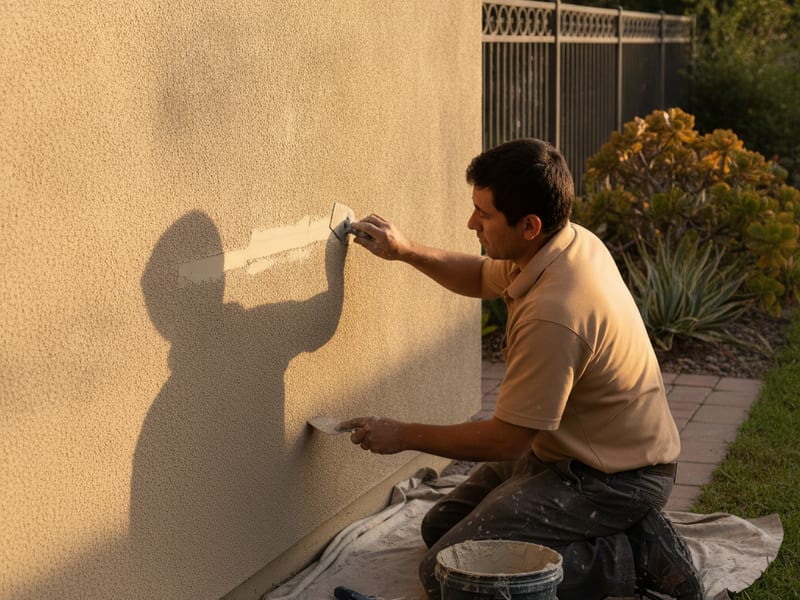
What's included in stucco crack repair?
The insured C-35 crews we match you with handle the work itself. On a typical job they:
- Probe and photograph each crack to determine whether it is a surface shrinkage crack, a structural movement crack, or a symptom of moisture or lath failure beneath
- Open structural cracks to a V-groove profile, clean out loose material, and apply bonding agent before filling so the new material bonds to the parent stucco
- Fill hairline and surface cracks with a matching Portland cement or acrylic-modified patch mortar and trowel smooth
- Apply a scratch and brown coat sequence to deeper voids or areas where the stucco has separated from the substrate
- Texture the repair area to match the surrounding finish coat, feathering the edges to minimize visual contrast
- Apply a color coat or primer to the repaired area when a close color blend is part of the scope
When do you need stucco crack repair?
- Cracks visible from the street or from close inspection that are wider than a hairline or have jagged irregular edges indicating movement
- Cracks that have grown noticeably from one inspection to the next, suggesting ongoing foundation or framing movement
- Staining or efflorescence appearing at or below a crack line, which indicates water has been passing through the stucco at that point
- Interior paint bubbling or drywall staining in a room adjacent to an exterior crack
- A home inspection flagged stucco cracks as a condition item on a pending sale
What do homeowners ask about stucco crack repair?
Are stucco cracks a serious problem or just cosmetic?
It depends on the crack. A fine hairline crack that runs with the texture lines is usually cosmetic shrinkage from curing or thermal cycling. A crack that is wider than 1/8 inch, follows a diagonal path at a window corner, or has visible staining at its edges is likely allowing water in and needs repair before it causes damage to the lath, sheathing, or framing. When in doubt, get it looked at.
Why do stucco cracks keep coming back after repair?
Recurring cracks usually mean the underlying cause was not addressed. The most common causes are ongoing foundation movement, a failed control joint that was not properly reestablished, or a structural crack that was filled at the surface without opening and re-bonding the full depth. The crews we connect you with diagnose the cause before filling so the repair has a better chance of holding.
Will the repaired crack be visible?
On a textured surface, a well-executed repair blends closely but may show a slight ghost line in raking light, especially on darker color coats. The visibility depends on how well the texture is matched and how close the color is to the existing weathered surface. On a painted surface, priming and painting the repaired area typically hides the repair completely.
Do stucco crack repairs require a permit?
Routine crack fills and surface patches generally do not require a permit. If the repair scope requires opening the wall to replace damaged lath or sheathing, a permit is typically required. The crews we connect you with assess the permit requirement as part of the in-home assessment.
Is stucco crack repair the same as a patch in San Diego?
No. Crack repair is for a line in the wall: the crew opens it, finds whether it is shrinkage, movement, or water getting in, then fills and textures it. A patch is for a missing chunk, a pop-out, or a hollow area that has to be cut back to sound stucco. If you searched stucco crack repairs San Diego CA, you want the crack diagnosis first. Impact holes and pop-outs belong on the patching page.
Where can you get stucco crack repair in San Diego County?
We match you with insured C-35 crews for stucco crack repair in every city and community in San Diego County. Pick your city for local climate notes and service specifics.
See stucco crack repair in all 67 cities
Need stucco crack repair in San Diego County?
We'll match you with an insured local stucco crew for this work.